In short
Marble is beautiful and soft, and it etches. Limestone and travertine are warm and need care. Granite and quartzite are hard and forgiving, and engineered or sintered stone is practical and consistent. Choose by how you cook, see the real slab in daylight and settle the seams before anything is cut.
The island is where the stone is seen
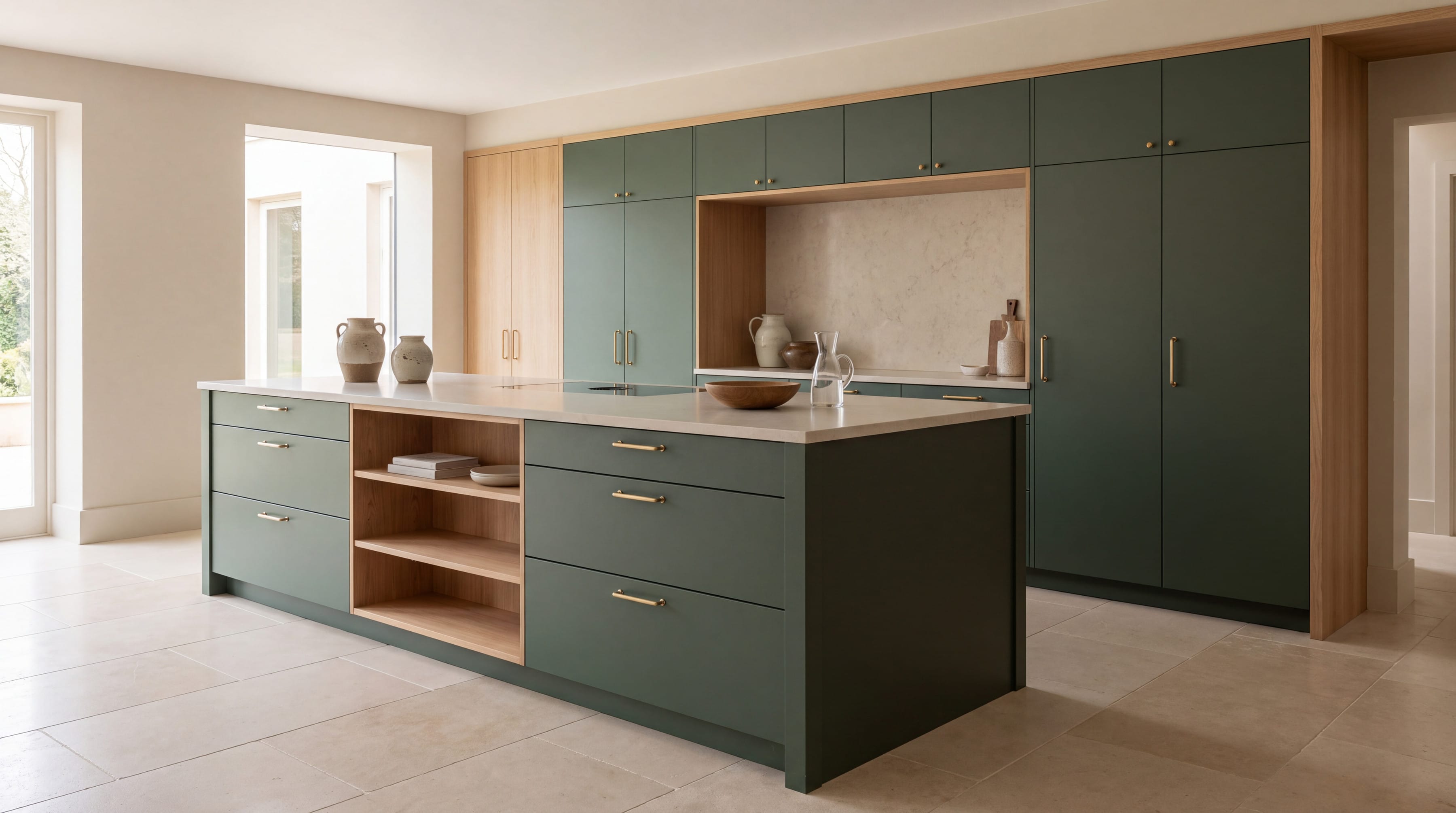
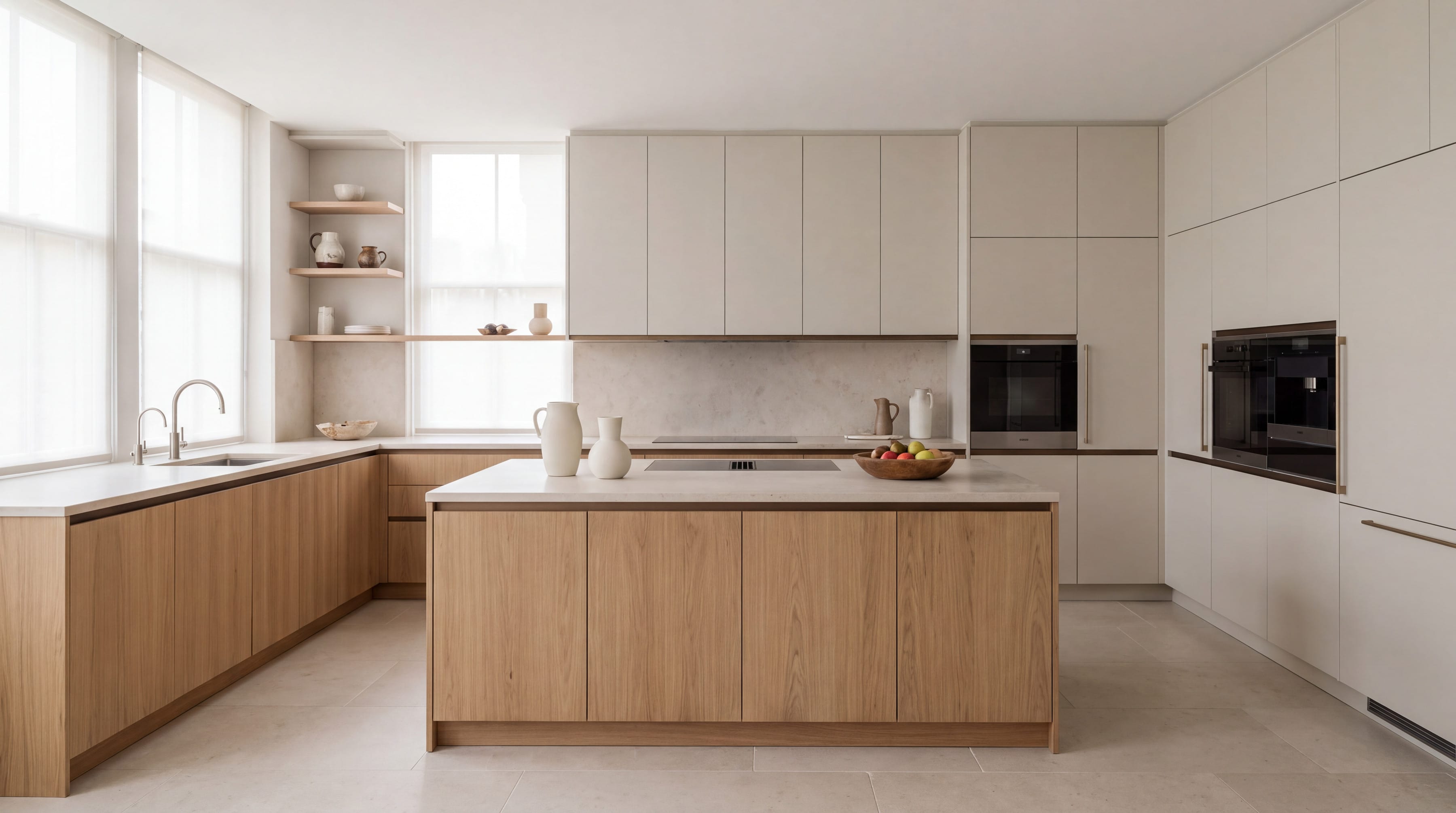
An island is where a kitchen meets the rest of the home. Guests lean on it, children do homework at it, and the cook works along its length. The stone you choose is seen and touched more than any other surface in the room, so it deserves more care than a colour swatch allows.
Four families come up most often. Each has a different character, a different way of ageing and a different set of habits it asks of you. None is the best. The right one is the one that fits how you actually live.
Is marble a good choice for a kitchen island?
Marble is a soft, veined stone, and it is beautiful for exactly that reason. It is mostly calcium carbonate, so acids such as lemon juice, wine and vinegar slowly dull a polished surface. This is called etching. It is not a stain. It is a change in the surface itself.
A honed finish, which is matt and not shiny, hides most etching and shows less of it. Marble also takes a patina over the years, a soft record of use. For some households that is the point. They want a surface that changes and carries the marks of meals and conversations. For others, any mark is a flaw, and marble will cause worry.
Be honest about which of these you are. If you cook with a lot of acid and want the surface to look new in ten years, choose another stone.
Limestone and travertine: warm, quiet and soft
Limestone and travertine are warmer and quieter than marble. They are also softer and more porous. Travertine carries the small holes of its formation, which are usually filled and honed for a kitchen, so the surface is smooth under the hand.
These stones suit rooms that want calm and warmth, with oak, plaster and soft light. They need sealing, they mark more easily than harder stones, and they reward a gentle routine. They are a good choice for an island used mainly for serving and eating, and less suited to heavy daily chopping and hot pans.
Granite and quartzite: the hard-wearing choice
Granite and quartzite are hard stones. Granite is speckled and resists heat, scratches and most acids well. Quartzite can show the long, flowing movement that people love in marble, with far better resistance to etching, and it is a good choice for heavy daily cooking.
One caution. The name quartzite is used loosely in the trade, and stones sold under it vary in hardness. Ask for a sample and test it. A true quartzite will scratch glass, and a simple drop of lemon juice left for a few minutes will show how it behaves. Slabs also vary widely in colour and pattern, so they should always be chosen in person.
Engineered stone and sintered slab: practical, not natural
Engineered stone is made from crushed quartz bound with resin. It is consistent, non-porous and low maintenance, and it needs no sealing. The pattern is controlled and repeats, so it works best in clean, modern rooms where evenness is the point. The resin can be damaged by very high heat, so hot pans need a trivet.
Sintered slab, sometimes called porcelain slab, is made by fusing minerals under heat and pressure. It is very hard, resists heat and stains, and can be made thin. It is lighter and can look very convincing, but edges need careful detailing and a hard knock to a corner can chip it. Both materials are practical. Neither will age like natural stone, and that is the trade you are making.
Polished, honed or leathered? Finish, edge and seams
A polished finish is glossy and shows depth in the veining. A honed finish is matt and calm, and it hides fingerprints and small marks. A leathered finish has a soft texture that you feel more than see. Sample all three in the stone you like. The same slab can look like three different materials.
Thickness and edge change the character of an island more than most people expect. A mitred edge folds the stone so a thin top reads as a solid block. A waterfall end carries the same slab down the side to the floor, and the veining continues around the corner. It is the most dramatic way to use a slab, and also the most demanding, because it needs precise cutting and enough slab to match the pattern.
Ask where the seams will fall before anything is cut. A seam is not a flaw, but it should sit where it makes sense, away from the sink and hob cut-outs, which are the weakest points of a stone top. Stone is also heavy, so the island base and the floor must be planned to carry it, and any seating overhang needs proper support.
If the island is large, ask about book-matching. Two slabs cut one after the other from the same block can be laid side by side and opened like a book, so the veining mirrors across the join. It is a striking effect, and it depends on the slabs being kept in order, so it has to be planned with the supplier before the stone is bought and not afterwards.
Choose the slab in person
Photographs and small samples tell only part of the story. Natural stone varies from slab to slab, and sometimes within one slab. Go to see the actual slab, ideally with the layout of the island drawn out beside it, so the vein can be placed where you want it.
Look at the stone in daylight and again in the evening, under the lights you will have in the room. Warm light changes the colour of many stones. Ask to see it wet, and ask what the supplier would do about a stain or a chip. Then touch it. Your hand will tell you things your eyes cannot.