In short
Every finish changes with light, heat, water and hands. Oak warms and can be refreshed, walnut can lighten in strong sun, marble etches into a patina while harder stones barely change, and lacquer is clean and hard but vulnerable at the edges. Put the toughest material where life is busiest and test real samples at home.
Every finish ages
A new kitchen looks its best on the day it is finished. After that, it begins to change. Light, heat, water and hands all leave their mark. No material stays exactly as it was installed, and the idea that one does is the root of most disappointment.
The useful question is not whether a finish will age, but how. Some materials age in a way that adds character. Others age in a way that looks tired. Which is which depends partly on the material and partly on you. Here is how the main families behave, so you can choose with your eyes open.
How does oak age?
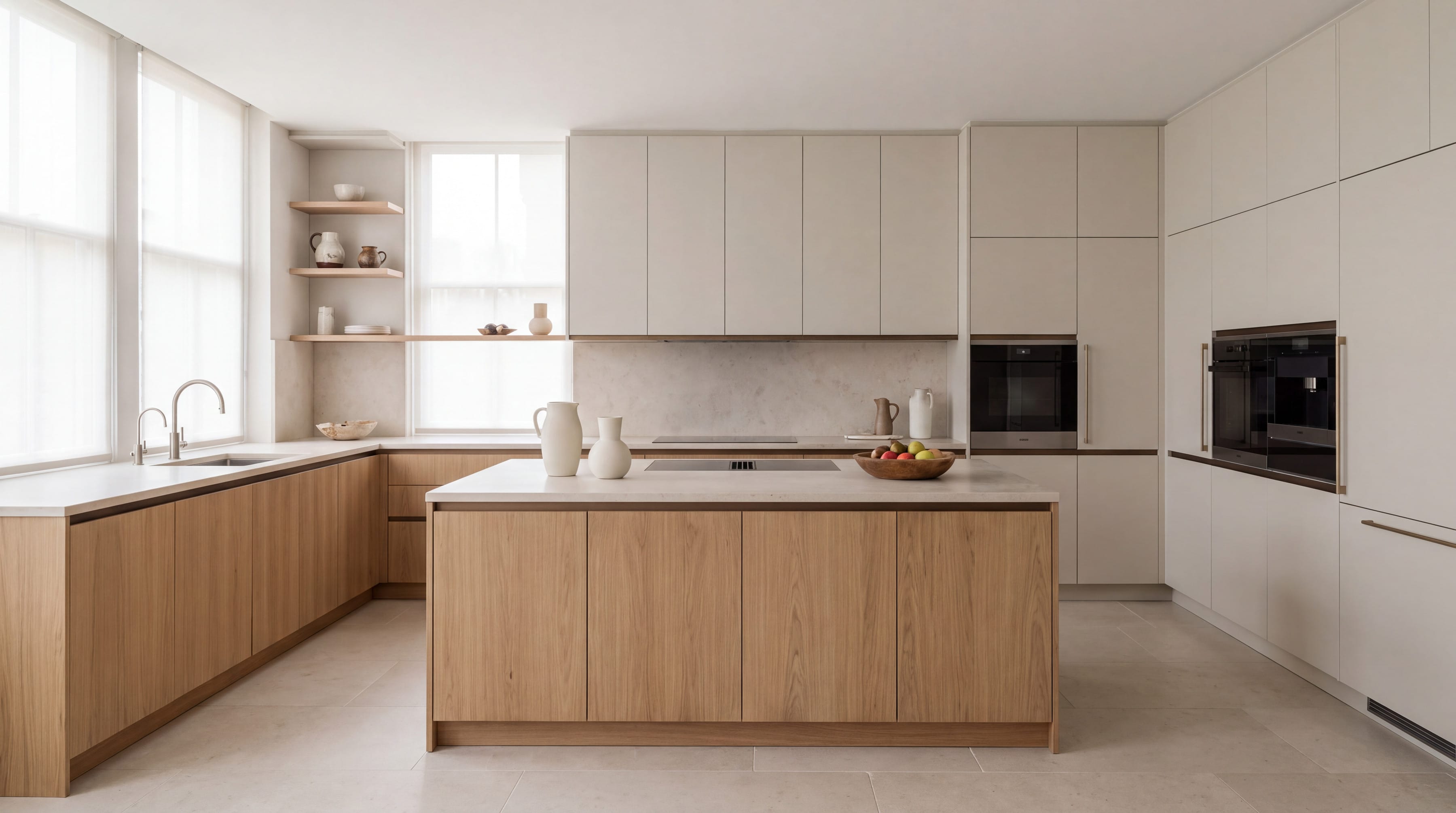
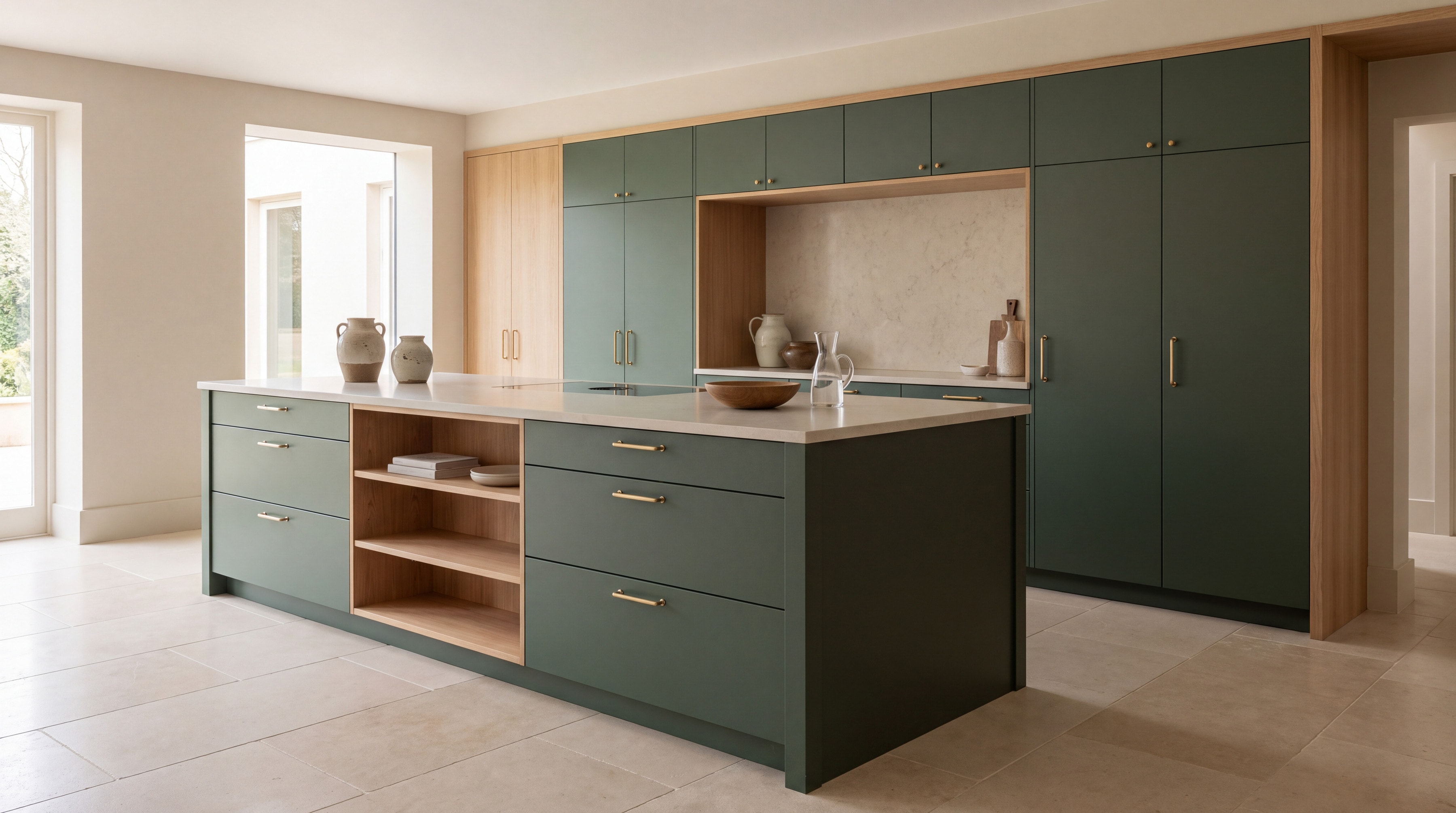
Oak is open-grained and forgiving. Oiled oak has a natural, tactile surface that does not look wet or plastic. It is kind to fingerprints and small scratches, which blend into the grain. When it is marked, it can be refreshed with a light sanding and fresh oil, so ageing becomes a matter of care and not a fault.
Oak also warms with time. Exposed to light, it gradually deepens towards honey and amber. The change is gentle and even if the whole surface sees the same light. Where a vase or a bowl stays in one place for months, a paler patch may remain, so move things now and then.
Lacquered or sealed oak is more resistant to water and stains, and less open to touch. It needs less upkeep, but a deep scratch is harder to repair invisibly. Both are good. The question is whether you prefer a surface you look after, or one that looks after itself.
How do walnut and darker timbers age?
Walnut is rich and dark, with a grain that moves like water. In strong daylight it can soften and lighten slowly, which surprises people who expect dark wood to darken further. Placing walnut away from a window with direct sun, or using blinds in the brightest hours, keeps its depth for longer.
Dark timber shows dust and fine scratches more than pale timber, and it looks best in a room with plenty of soft light. Thin veneer needs more care at the edges than solid timber, because it can lift if it is repeatedly soaked. Wipe spills quickly, keep the area around a sink dry, and any dark timber will serve for decades.
How does stone age?
Stone ages according to its hardness. Marble etches, so a polished marble worktop slowly shows pale, dull marks where acid has touched it. A honed finish makes the marks quieter. Some people love the resulting patina, in the way they love a worn leather chair. Others find it hard to live with, and they should choose a harder stone.
Limestone and travertine are soft and warm, and they take on a gentle wear where hands and plates move. Granite and quartzite are tough and change very little. Whatever the stone, sealing slows staining but does not prevent etching, and it needs renewing from time to time. Stone is also a stable partner for timber, because the two age in different ways and balance each other.
How does lacquer age?
Lacquer is a painted or sprayed finish, and it can be matt, satin or gloss. Gloss reflects light and looks deep when new, but it shows every fingerprint and fine scratch. Matt hides reflections and feels soft. It can show grease at the places you touch most, and in time those places may polish up slightly.
A modern matt lacquer with a fingerprint-resistant surface is a good compromise for busy rooms. Dark colours show dust and marks most, and light colours show stains. The finish is hard-wearing, but the edges are where it is most vulnerable, so careful detailing and gentle handling in the first weeks pay off. If a panel is damaged, it can often be re-sprayed. That is something solid timber and stone cannot offer in the same way.
How do metal and glass age?
Brass and bronze darken and take on a soft patina. Some people wish to keep them bright, and that means regular polishing. Others welcome the change, and a brass handle that is worn warm and dark at the touch point looks right. Brushed stainless steel collects fine scratches that blend into the grain. Powder-coated and anodised metals are more stable.
Glass does not age in colour, but it shows water spots, fingerprints and, in hard-water areas, limescale. A fluted or reeded glass hides these far better than a smooth pane, which is one reason it is so practical on a cabinet door.
Where the ageing happens
Walk around the room and mark the places where life will concentrate. The window sill and the surfaces facing the sun. The stretch of worktop beside the hob, where heat and splashes gather. The area around the sink, which is wet all day. The handles and fronts at hand height, which are touched hundreds of times. Choose the toughest material for those places and the most delicate where it is least used.
Bring samples home and live with them for a week. Leave them by a window, put a glass of juice on them, rub them with your hand. A sample that looks good after that will look good after ten years. And if you cannot decide, ask yourself which kind of ageing you would be happy to watch.
Ask, too, what can be repaired. Timber can be sanded and refinished. Honed stone can be honed again by a specialist. A lacquered panel can often be re-sprayed. Brass can be polished or left to darken. Glass and some engineered surfaces cannot be mended once damaged, and have to be replaced. A material that can be repaired forgives mistakes in a way that one that cannot be repaired never will.